

A good camera for vlogging and photography needs to do more than shoot sharp video. It should also take great photos, focus reliably, be comfortable to carry and, importantly, make sense at Malaysian prices.
A camera that looks like a bargain in an overseas review may cost considerably more here once you factor in the lens, official warranty and accessories.
So for this list, we looked beyond specifications and considered local pricing, portability, lens options and how practical each camera is to own in Malaysia.
Our Top Picks at a Glance
Camera | Best For | Approx. Malaysia Price* |
Sony A6700 | Best Overall | From RM5,500 |
Fujifilm X-S20 | Best Photo + Video Balance | From RM5,800 |
Sony A7C II | Best Premium Hybrid | From RM7,300 |
Panasonic Lumix S9 | Best Full-Frame Creator Camera | From RM6,200 |
Nikon Z50 II | Best for Beginners | From RM4,000 |
Sony ZV-E10 II | Best for Vlogging | From RM3,700 |
Canon EOS R8 | Best Value Full-Frame | From RM4,700 |
Fujifilm X-M5 | Best Compact Lifestyle Camera | From RM3,700 |
Canon EOS R50 V | Best Affordable Creator Camera | From RM2,849 |
DJI Osmo Pocket 3 | Best Pocket Vlogging Camera | From RM1,600 |
*Prices are approximate Malaysian retail prices checked in September 2026. Promotions, body-only prices and lens bundles can vary considerably.
1. Sony A6700: Our Best Overall Pick
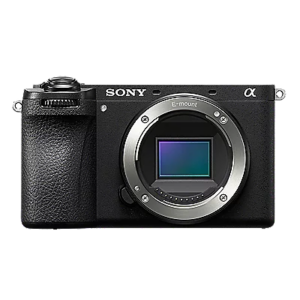
Best for: Someone who wants one camera for almost everything
Price: Around RM5,500+ body only
Specifications
- Sensor: 26MP APS-C back-illuminated Exmor R CMOS
- Processor: BIONZ XR
- Lens Mount: Sony E-mount
- Video: Up to 4K 120p, 10-bit 4:2:2
- Stabilisation: 5-axis in-body image stabilisation (IBIS)
- Autofocus: AI-assisted subject recognition and tracking
- Screen: Fully articulating touchscreen
- Viewfinder: Electronic viewfinder
- ISO Range: ISO 100 to 32,000 for stills, expandable
- Weight: Around 493g with battery and memory card
- Notable Feature: Dedicated AI processing unit for subject detection
The Sony A6700 is the camera we’d be most comfortable recommending to someone who says, “I want to take nice photos, but I also want to vlog.”
There isn’t one flashy feature that makes it number one. Rather, it does practically everything well.
Its 26MP APS-C sensor gives you plenty of resolution for travel, portraits, food and social photography, while 4K 120p gives video creators much more flexibility for slow-motion footage.
Sony’s dedicated AI processing unit can recognise and track subjects, while five-axis IBIS helps when you’re shooting handheld.
Sony’s E-mount ecosystem is another major advantage. There are lenses from Sony as well as third-party manufacturers, giving you plenty of room to move from a basic zoom to portrait primes, ultrawides or more serious glass later.
What we like
- Excellent autofocus and subject tracking
- 4K 120p is useful for higher-end video work
- Built-in stabilisation
- Large Sony and third-party lens ecosystem
- Compact enough for travelling
- Strong enough for both casual and professional use
The catch: It isn’t cheap once you add a good lens, and 4K 120p comes with additional cropping.
2. Fujifilm X-S20: The One We’d Pick for Photos and Creative Content
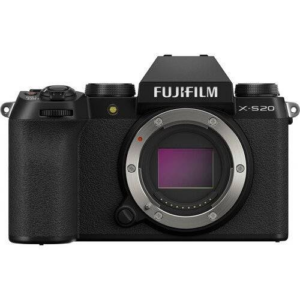
Best for: Travel, lifestyle, food, portraits and video
Price: Around RM5,800+ body only
Specifications
- Sensor: 26.1MP APS-C X-Trans CMOS 4
- Processor: X-Processor 5
- Lens Mount: Fujifilm X-mount
- Video: 6.2K 30p, 4K 60p, internal 10-bit recording
- Stabilisation: 5-axis IBIS, rated up to 7 stops
- Autofocus: Phase-detection AF with subject detection
- Screen: 3-inch vari-angle touchscreen
- Viewfinder: Electronic viewfinder
- ISO Range: ISO 160 to 12,800 standard
- Photo Formats: JPEG, HEIF and 14-bit RAW
- Notable Feature: Fujifilm Film Simulations
The Fujifilm X-S20 feels a little different from the Sony.
If you’re the type of person who actually enjoys taking photos, experimenting with colours and getting images you already like straight out of the camera, this would be very high on our shortlist.
Its 26.1MP X-Trans sensor is paired with Fujifilm’s newer X-Processor 5, while video stretches all the way to 6.2K at 30p in a 3:2 format. It can also shoot 4K at up to 60p and offers internal 10-bit recording.
The other big attraction is the Film Simulation system. Instead of always shooting flat footage or RAW photos and editing everything later, you can create distinctive looks in-camera.
Why We’d Choose It Over the A6700
Choose the X-S20 if you care more about:
- Fujifilm colour and Film Simulations
- Getting attractive JPEGs straight from camera
- Photography as much as video
- 6.2K open-gate-style recording flexibility
- Strong built-in stabilisation
Choose the A6700 if autofocus, 4K 120p and the widest possible lens selection matter more.
3. Sony A7C II: A Full-Frame Camera You Can Actually Travel With
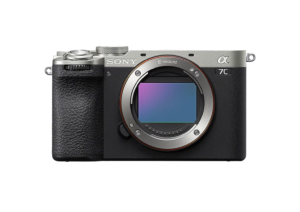
Best for: Serious creators, portraits and paid work
Price: Around RM7,300+
Specifications
- Sensor: 33MP full-frame back-illuminated Exmor R CMOS
- Processor: BIONZ XR
- Lens Mount: Sony E-mount
- Video: Up to 4K 60p
- Colour: S-Log3 support
- Stabilisation: 5-axis IBIS rated up to 7 stops
- Autofocus: AI-based subject recognition
- Screen: Vari-angle touchscreen
- Viewfinder: Electronic viewfinder
- Body Type: Compact full-frame mirrorless
- Notable Feature: Full-frame image quality in a relatively small body
If you’re willing to spend more, the Sony A7C II is where things start feeling properly premium.
The big upgrade here is the 33MP full-frame sensor. Compared with APS-C, it gives photographers greater control over depth of field and can be particularly useful for portraits, events and low-light photography.
It also gets Sony’s AI processing unit, 4K 60p recording, S-Log3 and five-axis stabilisation rated at up to seven stops.
So while it looks relatively compact, you’re getting a camera that could comfortably move from travel photography into client portraits, events and commercial video.
What we’d consider first: The lenses. Full-frame E-mount glass can become expensive quickly, especially if you start looking at fast F1.4 primes or professional zooms.
4. Panasonic Lumix S9: Surprisingly Good for Social-First Creators
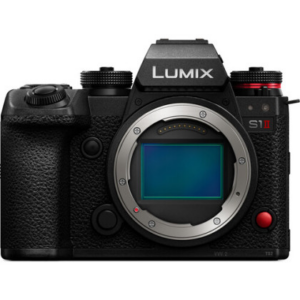
Best for: Reels, travel video and creators who like colour
Price: Around RM6,200+ body only
Specifications
- Sensor: 24.2MP full-frame CMOS
- Lens Mount: L-Mount
- Video: 6K and 4K recording
- Open Gate: Full-sensor-height recording available
- Stabilisation: In-body image stabilisation
- Autofocus: Phase Hybrid AF
- Colour: Real Time LUT and V-Log
- Dynamic Range: More than 14 stops with V-Log
- Still Resolution: 6000 × 4000 pixels at full resolution
- Photo Formats: JPEG and RAW
- Notable Feature: Real Time LUT workflow for ready-to-share looks
The Lumix S9 is probably the most interesting alternative to the predictable Sony and Fujifilm recommendations.
Despite its compact body, it uses a 24.2MP full-frame sensor. Panasonic also gives it 6K recording, open-gate shooting and a V-Log mode rated for more than 14 stops of latitude.
Open-gate recording is particularly useful for social creators. Because you’re capturing more of the sensor vertically, one recording can be reframed for:
- YouTube in 16:9
- TikTok or Reels in 9:16
- Instagram in 4:5
- Other social formats
Its Real Time LUT system is another nice touch. You can apply customised looks in camera instead of treating colour grading as something that always needs to happen afterwards.
The catch: It lacks an electronic viewfinder, so traditional photographers may prefer the A7C II, X-S20 or EOS R8.
5. Nikon Z50 II: A Great First “Real Camera”
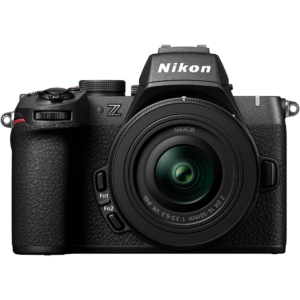
Best for: Beginners who want to learn photography properly
Price: Around RM4,000 body only
Specifications
- Sensor: 20.9MP APS-C/DX CMOS
- Processor: EXPEED 7
- Lens Mount: Nikon Z-mount
- Video: 4K 60p, with crop at 60p
- Slow Motion: Full HD up to 120p
- Colour: N-Log and HLG support
- Autofocus: Subject detection for 9 subject types
- Burst Shooting: Up to 30fps with Pre-Release Capture
- Screen: 3.2-inch vari-angle touchscreen
- Viewfinder: 2.36-million-dot EVF
- Weight: Around 495g
- Stabilisation: Electronic VR for video, no sensor-shift IBIS
Some cameras feel as though they were designed for creators first and photographers second.
The Nikon Z50 II feels the other way around, and that isn’t a bad thing.
It uses Nikon’s 20.9MP DX sensor with the same EXPEED 7 processor family found in much more expensive Nikon cameras. Subject detection can recognise nine different subject types, including people, animals, birds, cars, motorcycles, bicycles, trains and aircraft.
Why it stands out
- Comfortable photo-first handling
- Proper EVF
- Strong subject-detection autofocus
- 4K 60p and 10-bit video options
- Nikon Z lens compatibility
- Useful Product Review Mode for creators
The catch: There is no in-body image stabilisation.
Our take: Maybe not the trendiest camera on TikTok, but one of the better options if you genuinely want to learn photography as well as make content.
6. Sony ZV-E10 II: The Easy Recommendation for Vloggers

Best for: YouTube, talking-head videos and product content
Price: Around RM3,700 body only
Specifications
- Sensor: 26MP APS-C back-illuminated Exmor R CMOS
- Processor: BIONZ XR
- Lens Mount: Sony E-mount
- Video: Up to 4K 60p
- Video Quality: 10-bit 4:2:2 available
- Oversampling: 5.6K oversampled to 4K
- ISO Range: ISO 100 to 32,000
- Screen: Fully articulating touchscreen
- Viewfinder: None
- Stabilisation: Electronic/Active stabilisation, no sensor-shift IBIS
- Audio: Multi Interface Shoe supports compatible digital microphones
- Notable Feature: Creator-focused controls and interchangeable lenses
If your priorities are closer to 70% video and 30% photography, look here.
The Sony ZV-E10 II shares its 26MP APS-C resolution and BIONZ XR processing with more advanced Sony bodies, and can record 4K 60p in 10-bit 4:2:2. Its regular 4K footage is created from 5.6K oversampled information, giving it plenty of detail.
Who Should Buy It?
It’s particularly well suited to:
- YouTubers
- Beauty creators
- Food content
- Product reviews
- Home studios
- Small business videos
- Creators moving beyond smartphone video
What you’re giving up: There is no electronic viewfinder and no mechanical in-body stabilisation.
7. Canon EOS R8: Full-Frame Without Going Straight to RM8,000+

Best for: Portraits, events and photographers moving into video
Price: Around RM4,700 to RM5,800 body only
Specifications
- Sensor: 24.2MP full-frame CMOS
- Lens Mount: Canon RF
- Video: 4K 60p oversampled from 6K
- Slow Motion: Full HD up to 180p
- Colour: 10-bit Canon Log 3
- Autofocus: Dual Pixel CMOS AF II
- Burst Shooting: Up to 40fps electronic shutter
- Screen: Vari-angle touchscreen
- Viewfinder: Electronic viewfinder
- Weight: Approx. 461g
- Stabilisation: No in-body sensor-shift stabilisation
- Notable Feature: One of the lighter full-frame hybrid bodies
The Canon EOS R8 might be the sleeper pick of this list.
For the money, you’re getting a 24.2MP full-frame sensor, 4K 60p video oversampled from 6K, Full HD 180p and Canon Log 3. Its electronic shutter can also shoot stills at up to 40fps.
At approximately 461g, it is impressively light for a full-frame camera.
That’s important because one of the usual downsides of moving to full frame is carrying a bigger setup. The R8 body itself doesn’t create that problem.
But there is a compromise: No IBIS.
If your videos are mainly tripod-based interviews, studio work and product content, that may not matter much. For handheld walk-and-talk footage, we’d rather have the A6700 or Lumix S9.
8. Fujifilm X-M5: The Camera We’d Take to a Café or Weekend Trip
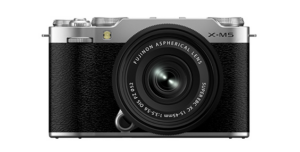
Best for: Lifestyle, café, fashion and travel content
Price: Around RM3,700+
Specifications
- Sensor: 26.1MP APS-C X-Trans CMOS 4
- Processor: X-Processor 5
- Lens Mount: Fujifilm X-mount
- Video: 6.2K 30p open gate
- 4K: Up to 60p
- Slow Motion: Full HD up to 240p
- Colour Depth: Up to 10-bit 4:2:2
- Autofocus: 425 phase-detection points with subject detection
- Screen: 3-inch vari-angle touchscreen
- Viewfinder: None
- Stabilisation: Digital stabilisation for video, no IBIS
- Weight: Approx. 355g with battery and memory card
- Audio: Three built-in microphones plus headphone and microphone ports
- Notable Feature: Dedicated Film Simulation dial
The Fujifilm X-M5 makes a lot of sense once you stop thinking purely in specifications.
But the specifications are actually pretty impressive too.
Inside a 355g body, you get the same 26.1MP X-Trans CMOS 4 sensor resolution as the X-S20, Fujifilm’s newer X-Processor 5 and 6.2K 30p open-gate video. It also manages 4K 60p and Full HD recording up to 240p for slow motion.
There are even three built-in microphones, plus dedicated headphone and microphone ports.
The compromises are equally clear:
- No EVF
- No mechanical IBIS
- Smaller grip
- Digital stabilisation can crop the image
For someone shooting OOTDs, food, travel, cafés, Instagram and casual video, we’d understand the appeal immediately.
9. Canon EOS R50 V: A Lot of Camera for Under RM3,000

Best for: Beginner creators on a tighter budget
Price: RM2,849 body only
Specifications
- Sensor: 24.2MP APS-C CMOS
- Lens Mount: Canon RF/RF-S
- Video: Internal 10-bit 4K 60p
- 4K 30p: Oversampled from 6K
- 4K 60p: Recorded with a crop
- Colour: Canon Log 3
- Autofocus: Dual Pixel CMOS AF II
- Burst Shooting: Up to 15fps electronic shutter
- Screen: Vari-angle touchscreen
- Viewfinder: None
- Video Tools: False colour, zebra display and custom LUT preview
- Creator Features: Vertical controls and dedicated livestream button
- Official Malaysia RRP: RM2,849 body only
At an official Malaysian body price of RM2,849, the EOS R50 V gives you a 24.2MP APS-C sensor, Dual Pixel CMOS AF II and internal 10-bit recording.
4K 30p is created using 6K oversampling, while 4K 60p is available with a crop. You also get features that used to be associated with much more expensive video cameras, including Canon Log 3, false colour, zebra displays and LUT previews.
Canon has clearly designed this around modern content production rather than simply taking a traditional photography camera and adding a record button.
Choose it if: Vlogging, YouTube, Reels and livestreaming matter more to you than having an EVF.
The catch: Like the ZV-E10 II, it does not have IBIS or a viewfinder, so it is less appealing for someone whose priority is traditional photography.
10. DJI Osmo Pocket 3: The One You’ll Actually Carry Everywhere

Best for: Travel vlogging and walking videos
Price: Around RM1,600+ standard set
Specifications
- Sensor: 1-inch CMOS
- Lens: Fixed 20mm-equivalent wide-angle lens
- Video: Up to 4K 120fps
- Stabilisation: Built-in 3-axis mechanical gimbal
- Screen: 2-inch rotating touchscreen
- Screen Brightness: 700 nits
- Microphones: Three built-in microphones
- Storage: microSD up to 1TB
- Weight: 179g
- Dimensions: 139.7 × 42.2 × 33.5mm
- Lens System: Fixed lens, not interchangeable
- Notable Feature: Mechanical gimbal built directly into the camera
Technically, the DJI Osmo Pocket 3 is the odd one out.
It’s not an interchangeable-lens mirrorless camera, and we wouldn’t recommend it as your main photography camera.
But for vlogging? It’s fantastic.
The Pocket 3 combines a 1-inch sensor, 4K recording up to 120fps and a three-axis mechanical gimbal inside a camera weighing just 179g.
That mechanical stabilisation is the real difference. Instead of relying entirely on digital correction or IBIS, the camera itself physically moves to keep your footage smooth.
The catch: The fixed lens and smaller photography controls make it much less flexible for portraits, telephoto shots or serious still photography.
Which Camera Should You Actually Buy?
You don’t need the “best camera.” You need the one that fits what you actually shoot.
If you want one safe recommendation: Go with the Sony A6700.
If photos matter just as much as video: We’d look at the Fujifilm X-S20.
If you want full-frame: The Canon EOS R8 offers excellent value, while the Sony A7C II is the more premium all-rounder.
If you’re mainly a vlogger: The Sony ZV-E10 II is easier to justify than paying extra for photography features you may rarely use.
If your budget is around RM3,000: The Canon EOS R50 V is really attractive.
If you hate carrying camera bags: Get the DJI Osmo Pocket 3.
Camera reviews can make everyone feel as though they need full frame, IBIS, 10-bit recording and six different lenses.
But truthfully, a smaller camera that you enjoy using may produce far more content than a technically better one that rarely leaves the cupboard.
What Should You Check Before Buying a Camera in Malaysia?
Don’t Compare the Body Price Alone
A RM3,800 body can easily turn into RM5,000 once you add:
Lens + SD card + spare battery + microphone + tripod
Always compare the cost of a usable setup rather than the headline camera price.
Check If It’s an Official Malaysia Set
Especially on marketplaces, you may see the same camera listed hundreds of ringgit cheaper elsewhere.
Check if you’re buying an official Malaysian unit, imported set or shop-warranty unit. Warranty arrangements and after-sales support can differ.
Sony, for example, currently advertises 17 service centres nationwide through its Malaysian store.
Think About the Lens You’ll Want Next
Sony E-mount and Fujifilm X-mount give buyers specific broad APS-C choices, including third-party lenses. Canon RF and Nikon Z continue to expand too.
Before deciding on a body, search Malaysian shops for the lens you imagine buying six months later.
Consider Malaysia’s Weather
If you’re planning long outdoor video sessions, our heat and humidity are worth considering.
Battery life, thermal management and weather protection matter more when you’re filming under the afternoon sun than they do inside an air-conditioned studio.
And regardless of camera, storing photography equipment in a dry cabinet is worth considering in Malaysia’s humid climate.
Choose the Camera Fit For Your Needs
For most people who genuinely want both photography and vlogging, our favourite overall choice is the Sony A6700, followed closely by the Fujifilm X-S20.
Both give you enough room to learn photography, experiment with lenses and create increasingly serious video without immediately needing another camera.
The Canon EOS R50 V gives beginners an unusually accessible route into creator-focused mirrorless cameras, while the DJI Osmo Pocket 3 is arguably more useful than any of them if portability is what determines whether you actually film.
The best buy ultimately comes down to what you’ll use most: photos, vlogs, travel, social media or a bit of everything.
Want the latest tech news news and comparisons content? Follow us on Suggest MY! We’ll cover the leading stories and trending tech topics meant to drive innovation and global change.
Frequently Asked Questions About Camera for Vlogging
Which Camera Is Best for Both Photography and Vlogging?
The Sony A6700 is our best overall choice because it combines strong autofocus, IBIS, good still photography performance, advanced video features and a wide selection of lenses.
What Is the Best Vlogging Camera for Beginners in Malaysia?
The Canon EOS R50 V and Sony ZV-E10 II are both excellent beginner options. The Canon is cheaper, while the Sony gives you access to a particularly broad E-mount lens ecosystem.
What Is the Best Camera Under RM3,000 in Malaysia?
The Canon EOS R50 V body is officially priced at RM2,849 in Malaysia. If video and portability are your main priorities, the DJI Osmo Pocket 3 is another strong option below this budget.
Is Sony or Fujifilm Better for Vlogging?
Sony generally has the advantage for autofocus and its extensive lens ecosystem, while Fujifilm is particularly appealing to creators who value colour, Film Simulations and the photography experience.
Do I Need a Full-Frame Camera for Vlogging?
No. APS-C cameras such as the Sony A6700 and Fujifilm X-S20 are more than capable of producing professional-looking photos and videos. Full-frame becomes more attractive for low-light work, portraits and certain professional applications.
Is the DJI Osmo Pocket 3 Good for Photography?
It can take photos, but photography is not its main strength. The Pocket 3 is much better suited to travel videos, walking footage and vlogging. If photos matter equally, choose an interchangeable-lens camera instead.