

There was a time when contacting customer service meant calling a hotline, waiting through hold music and eventually speaking to someone. Occasionally, you’d encounter a chatbot with very preprogrammed messages and questions. Now, you are increasingly greeted by a little chat bubble asking, “Hi! How can I assist you today?” That’s probably a chatbot, and increasingly it may be AI-powered.
Banks use AI chatbots. Online shops use them. Food delivery platforms use them. Telcos use them. Airlines use them. Even government agencies have started deploying chatbots and AI-assisted services.
Malaysia is no exception. Government channels already include services such as SITI@MyGCC and the Legal Aid Department’s eLegal Advisory Chatbot, alongside broader digital-service initiatives. Globally, adoption is moving in the same direction as companies look for ways to automate repetitive enquiries, reduce waiting times and provide 24/7 support.
From the company’s perspective, the appeal is obvious. A chatbot can handle many conversations at once without needing another employee for every extra conversation. That makes AI extremely attractive for high-volume customer service. Plus, it seemingly saves them money if they don’t need to pay a customer service agent.
So whether customers love them or hate them, chatbots are probably not disappearing anytime soon.
Why Do Companies Love AI Chatbots So Much?
To be fair, there are plenty of situations where chatbots make sense, at least from a company’s POV.
Nobody really needs a human customer service agent manually answering “What time do you close?” hundreds of times a day. The same goes for basic delivery tracking, password resets, appointment information and simple policy questions. And sometimes, human agents can be pretty inefficient too, especially if they take ages to process your request.
The problem starts when businesses confuse automating simple enquiries with automating customer service altogether.
Those are very different things.
Read More: Is Batik Air Worth It for Travel and Leisure Flights?
Why Do Chatbots Struggle With Problems That Seem Obvious?
Because real customer problems are messy.
Imagine your food delivery rider cancels after you have already waited 45 minutes. The restaurant prepared your order, your card was charged and you cannot tell whether your refund has actually been issued. Plus, you’re hungry.
You contact support, explain everything clearly, and the chatbot notices one word: refund.
So it sends you the company’s refund policy.
That’s technically related to your question, but it does NOT actually answer it. You already know how refunds normally work, for goodness sake. What you want to know is whether your specific refund has been processed.
Human Judgment vs AI Logic
This is where weaker chatbots fall apart. They can recognise a topic without necessarily understanding the situation behind it.
A human agent might check your transaction, delivery status, cancellation reason and refund record. A chatbot may simply respond with, “Refunds normally take three to five working days.”
You ask again whether yours has been submitted.
It gives you the same answer.
And now you are stuck in customer-service Groundhog Day.
Why Is It So Hard to Just Speak to a Human?
Arguably, this is even more frustrating than getting a bad automated answer.
You type “Speak to agent.” The bot asks what your issue is. You type “Speak to human.” It sends a few help articles. You try “Customer service agent.” It asks whether those articles solved your problem.
At this stage, your original issue has been replaced by a new one: escaping the chatbot. Kind of like you’re being chased by a Terminator, except this robot keeps you trapped in poor customer service hell. Which might be worse, actually.
The technology itself is not necessarily the problem here, but the design is.
Some companies make human support the absolute final step, as though reaching a real person should only happen after the customer has failed every automated option first. Research into chatbot-to-human transfers suggests customers respond better when they can initiate a handover early, rather than being forced to stay in an automated conversation after it has clearly stopped being useful.
That sounds obvious because it is, though unfortunately many companies fail to understand it. If someone has typed “human agent” several times, the system should probably stop trying to convince them otherwise.
Why Are Refunds and Complaints Particularly Bad for AI?
Customer service gets even harder once judgement enters the picture.
A customer asking, “When will I get my refund?” might technically be asking for a date. But the actual situation could be much more frustrating. They may have waited an hour, lost their order, had money taken from their account and still have no idea whether anything is being fixed.
That’s not just an information request anymore. It might need investigation, reassurance and potentially compensation.
This is also where chatbots run into another limitation: authority.
Businesses understandably do not want an AI approving every refund, account change or goodwill payment without verification. That means many bots are very good at explaining company policies but have limited ability to actually resolve the problem.
There is nothing inherently wrong with that, as long as the chatbot knows when to hand the issue over.
Too often, it does not.
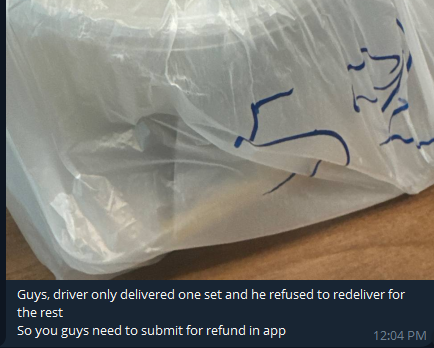
Here’s an example some of my colleagues faced, when our food delivery didn’t arrive. Getting the refund was a total pain. Yeah, the driver was kind of stubborn too, but the crappy AI chatbot certainly didn’t help. They had to spam the refund function to get their money back.
Are AI Chatbots Actually Bad at Everything?
Not at all.
For simple, repetitive tasks, they can be genuinely useful. Order tracking, opening hours, appointment information, password resets, FAQs and basic troubleshooting are all areas where automation can save customers and companies time.
AI can also make human customer-service teams better rather than simply replacing them. It can summarise conversations, retrieve information, suggest responses and reduce repetitive admin work while a human agent remains responsible for the actual decision.
That distinction matters.
AI replacing customer service completely? Questionable.
AI helping customer-service agents work faster? Much more promising.
Are Companies Starting to Realise AI Can’t Replace Everyone?
This is where things get interesting.
Over the past few years, companies worldwide have talked heavily about automation, efficiency and reducing headcount through AI. But some organisations are starting to discover that replacing human work is not as straightforward as expected.
Gartner predicted in February 2026 that 50% of companies that attributed customer-service headcount reductions to AI would rehire people for similar functions by 2027, although those roles may return under different titles. Gartner highlighted limitations around expertise, empathy and human judgement as key reasons.
Its wider research points in the same direction. Gartner expects many customer-service organisations to increase spending on technology significantly, but not necessarily reduce human staffing at the same rate.
This does not mean AI has failed, but it does suggest companies are learning that replacing employees and helping employees are two very different strategies.
Apparently, “we’ll automate everything” is a little easier to say in a boardroom than to make work in real life.
What Should Companies Actually Use AI Chatbots For?
A chatbot should probably behave more like a receptionist than the entire customer-service department. It should identify the problem, solve the easy stuff, gather the necessary details and then know when to pass the conversation to someone else.
Situation | Better Approach |
“Where is my order?” | Chatbot |
“What are your opening hours?” | Chatbot |
“How do I reset my password?” | Chatbot |
“Why was I charged twice?” | AI checks basics, then human if needed |
“My refund never arrived” | Human escalation |
“My account was wrongly suspended” | Human escalation |
“I’ve contacted you three times already” | Human escalation |
A chatbot should not become a maze that people have to complete before being allowed to speak to someone who can actually help.
Why Does Bad Chatbot Support Feel So Frustrating?
Bad chatbots create the illusion that progress is being made. You answer several questions, select a few menus, explain the problem twice and read some help articles. Ten minutes later, you are still exactly where you started.
At least when you are waiting for a human agent, you know you are waiting.
With a bad chatbot, you are actively participating in wasting your own time.
This criticism is not limited to Malaysia either. In the UK, consumer charity Citizens Advice has pushed for customers using essential services to retain clear access to human support, citing frustration, poor digital design and unresolved problems linked to digital-first systems and looping chatbots.
Read More: Fuel Price Uncertainty: Are Malaysians Doomed?
What Would Make AI Customer Service Better?
Ideally, some people WOULD like AI to disappear altogether. Unfortunately, that’s not likely to happen. Still, if companies are gonna keep AI customer service chatbots around, the fixes to improve them are actually fairly straightforward.
Easy Escalation: Customers should be able to reach a human quickly when automation stops being useful.
Conversation Memory: People should not have to explain their entire problem again after being transferred.
Better Context: Chatbots need to understand the broader situation instead of reacting to one keyword at a time.
Real Capabilities: If a bot claims it can handle refunds or account issues, it should have the tools and permissions to actually complete those tasks safely.
Clear Limits: If the AI cannot resolve something, it should simply say so and pass the issue along.
The irony is that better AI customer service may require businesses to stop obsessing over removing humans from the process.
AI Chatbots and You
AI chatbots are not going anywhere. They are simply too useful for routine enquiries, high-volume support and basic customer-service tasks.
The problem starts when businesses treat them as a complete replacement for human support rather than one part of the service process. When payments disappear, deliveries fail, accounts get locked or unusual problems appear, customers still need someone who can investigate, make a decision and take responsibility.
AI plus humans makes sense. AI standing between customers and humans because someone wanted to cut the support budget is where things start to suck.
For more takes on technology, consumer habits and everyday life in Malaysia, explore Suggest MY and our Malaysia business news and lifestyle coverage. From AI trends to the small frustrations affecting Malaysian consumers, there is plenty more worth talking about.
Sources
- Gartner, February 2026: Predicted that 50% of companies that attributed customer-service headcount reductions to AI would rehire people for similar functions by 2027, potentially under different titles.
- Gartner, March 2026: Predicted that more than half of customer-service organisations would double technology spending by 2028 without equivalent reductions in human talent.
- Citizens Advice: Reported concerns about poor digital customer-service experiences, including looping chatbots, and called for clearer access to human support in essential services.
- Malaysia Government Digital Services: Official examples include SITI@MyGCC and the Legal Aid Department’s eLegal Advisory Chatbot.
Frequently Asked Questions About The Frustration When Dealing With AI Chatbots
Why Do Customers Hate AI Chatbots?
Customers often become frustrated when chatbots misunderstand questions, repeat generic answers or make it unnecessarily difficult to contact a human agent. These weaknesses become especially noticeable during unusual or complicated problems.
Are AI Chatbots Replacing Customer Service Agents?
AI is taking over some repetitive customer-service tasks, but complete replacement remains difficult. Some organisations that expected AI to reduce staffing significantly are now reconsidering how much human support they still need.
Are AI Chatbots Good for Customer Service?
They can be very useful for predictable questions such as opening hours, delivery tracking, password resets and basic troubleshooting. Problems arise when businesses expect the same technology to handle complicated disputes, exceptions and emotional complaints.
Why Can’t Chatbots Solve Refund Problems?
Many customer-service chatbots can explain refund policies but, depending on how the company has set them up, may not have the permissions or system access needed to investigate transactions or approve refunds. More complicated cases therefore still require human intervention.
Should Companies Let Customers Speak to Human Agents?
Yes, especially when automated support cannot resolve the issue. A good system should make escalation relatively easy rather than forcing customers through repeated automated responses.
Will AI Customer Service Get Better?
Probably. Companies are pouring more money into AI customer-service technology, and the systems themselves should continue improving at understanding language and handling routine tasks. But complicated customer-service cases will still benefit from human judgement, authority and empathy.